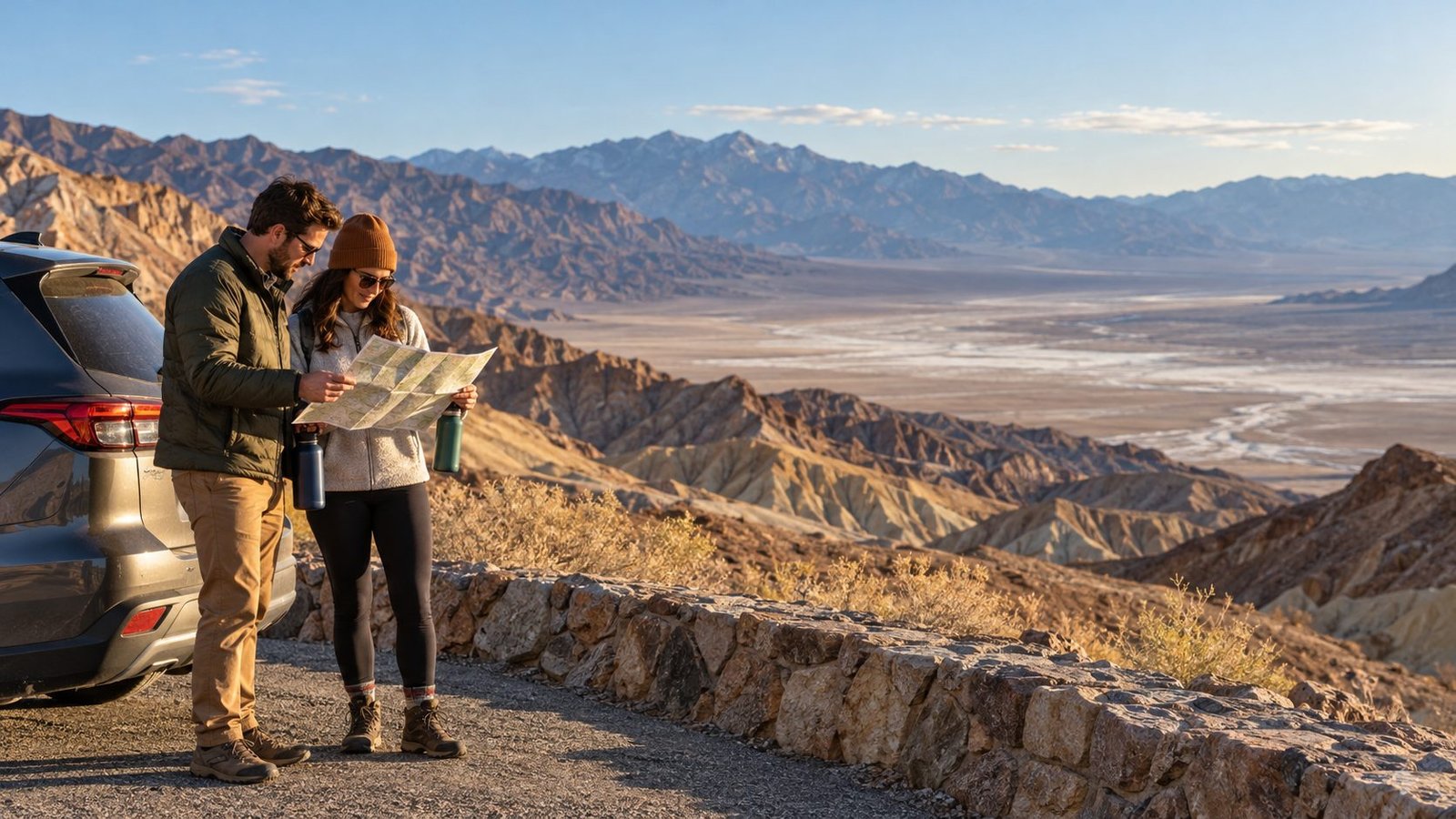
Direct answer: A fall Death Valley trip should be based on current road and campground conditions, not an old itinerary. Carry water, fuel early, download maps, and avoid depending on a remote road or seasonal campground without confirming that it is open.
As of October 9, 2026, the National Park Service continued to list restrictions at Saline Valley’s Lower Springs following a September wildfire. The immediate burn area remained closed because of hazards that included damaged infrastructure and partially burned batteries. nps.gov
Start with current conditions
Death Valley’s roads and facilities can be affected by flooding, fire, construction, or storm damage. Open the NPS alerts page shortly before departure and again when you have reliable service near the park.
Do not assume a route is usable because it appears on a navigation app. Download the official park map and note paved alternatives.
Tell someone your route and intended return time when entering a remote area. Cell coverage is unreliable across much of the park.
Confirm your campground
Furnace Creek Campground operates year-round, while Sunset, Stovepipe Wells, and Texas Springs typically operate seasonally. Stovepipe Wells was scheduled to open in late October 2026, subject to current conditions. National Park Service
Check the individual campground page before traveling. Facilities, reservation systems, fire rules, and opening dates are not identical.
Emigrant Campground and its water system remained closed because of flood damage, with no estimated repair date shown on the NPS accessibility page. nps.gov
Carry essential supplies
Begin with a full tank or fully charged vehicle and refuel before the remaining range becomes uncomfortable. Distances between services can be considerable.
Carry drinking water for everyone, simple food, a flashlight, weather layers, and a basic emergency kit. Fall nights can be much cooler than the daytime desert.
Do not count on a natural water source, closed campground, or visitor facility to solve a supply problem.
Keep the first itinerary conservative
Choose one primary scenic area and one optional stop. Long detours on desert roads can transform a straightforward day into an exhausting drive.
Stay on open, designated roads and park only at safe pullouts. Never cross a closure barrier or enter a burned area.
Avoid touching or feeding wildlife. NPS advises looking carefully before placing hands or feet near rocks or vegetation because the park is home to rattlesnakes, scorpions, and other potentially dangerous animals.
Takeaway: Current road information, a confirmed place to stay, and ample water are more important than an ambitious list of viewpoints.
FAQs
Are all Death Valley campgrounds open in October 2026?
No. Campgrounds have different seasons, and some locations are affected by damage or safety closures.
Can navigation apps be trusted for remote park roads?
They are useful but should be checked against current NPS road conditions and official maps.
Related guides: Joshua Tree Camping in Fall · Thanksgiving Road Trip 2026
Sources: NPS Death Valley conditions · NPS camping guide · NPS frequently asked questions